


Mechanical seals, as the beating heart of fluid transmission systems, are responsible for the vital task of sealing and preventing fluid leakage. However, these sensitive parts are exposed to extreme heat from friction and pumping processes. Excessive heat can lead to erosion, failure and premature flooding.
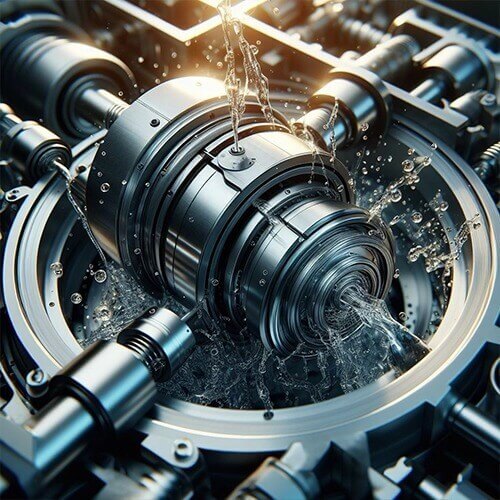
Fluid Flow: In this method, the pumped fluid is passed through the flood chamber to absorb its heat. This method is simple and common, but may not be efficient in cases where the fluid is contaminated with solid particles or has a high viscosity.
External fluid flow: In this method, a separate cooling fluid such as water or oil flows through a small heat exchanger in the flood chamber. This method provides more effective and controllable cooling, but increases the complexity and cost of the system.
Air Cooler: In this method, a fan is used to direct cool air to the flood chamber. This method is suitable for applications where space is limited or the pumped fluid does not generate much heat.
Cryogenic cooling systems: Cryogenic cooling systems, such as liquid nitrogen or carbon dioxide, are used to cool floods that work at very high temperatures or with very hot fluids.
Choosing the mechanical cooling method of the seal:
The choice of mechanical seal cooling method depends on various factors such as fluid type, temperature, pressure, rotational speed, and installation space requirements. When choosing a cooling method, the following points should be considered:
1- Cooling efficiency: the chosen method must effectively remove the heat generated by the flood
2-Fluid compatibility: The cooling fluid must be compatible with the pumped fluid and not cause corrosion or erosion of the flood.
3- Complexity and cost: more complex cooling methods have higher initial and maintenance costs.
While simple cooling methods such as fluid flow and external fluid flow are sufficient for many applications, in some cases more complex cooling methods are required for effective mechanical fluid cooling.