

Full introduction of dynamic pump
Dynamic pump is a type of pump that operate based on the principles of fluid dynamics.
In these pumps, using a mechanical actuator, kinetic energy is transferred to the fluid and its speed increases.
Then this increase in speed is converted into an increase in pressure using components such as a diffuser.

Unlike positive displacement pumps that increase the pressure by directly moving a volume of fluid, dynamic pumps create pressure by transferring energy to the fluid.
Dynamic pumps have advantages such as continuous flow rate and can be used in high flow rates. These pumps are used in various industries including oil, petrochemical, water and sewage, etc.
Types of dynamic pumps
There are different types of dynamic pumps, each of which is designed and built based on the principles of their performance and application.
In this section, we introduce the most common types of dynamic pumps and explain the characteristics of each. Getting to know the types of dynamic pumps helps to better understand the uses and benefits of each of them.
“Dynamic pumps” are divided into two main categories: “centrifugal pumps” and “special pumps”.
-
Centrifugal pumps
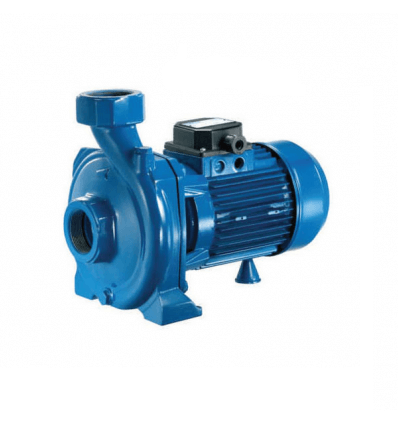
“Centrifugal pump” is the most common type of pumps used in industries and is available in four general categories as follows:
1.1- Axial flow pump:
In these pumps, the current is transferred by the impeller along the axis of the pump.
2.1- Radial flow pump:
This type of pump receives the fluid from the inlet located in the center of the pump and transfers it to the outlet in line with the radius of the pump impeller and an angle of 90 degrees to the pump inlet.
3.1- Mixed flow pump:
In these pumps, the flow moves along the radius of the pump impeller and its axis. In fact, it is a combination of the previous two types of pumps.
4.1- Peripheral Pump:
This type of pump, which is also known as “Vortex Pump”, “Turbine Pump”, or “Regenerative Pump”, although they are considered in the subcategory of centrifugal pumps, but in fact, they are the middle level.
Centrifugal pumps and positive displacement pumps. These pumps, like positive displacement pumps, can create high pressure at the output, and on the other hand, like centrifugal pumps, have a more flexible performance (of course, with a lower amount of variable flow).
The type of impeller inside these pumps is different from the other three types.
2- Special Effects Pumps:
As we mentioned, another category of dynamic pumps is “special effect pumps the four famous types of which are jet pump, gas lift pump, water ram pump and electromagnetic pump, which we will explain below :
1-2 – Jet Pump:
Jet pump, which is also referred to as “eductor” and “ejector”, the energy of a working fluid (liquid or gas) is transferred to the secondary fluid.
The second fluid can be gas, liquid, two-phase (mixture of gas in liquid) or solid particles inside the gas or liquid.
2.2- Gas lift pump:
In this type of pumps, an example of which is used in extracting oil from fields that have lost their pressure, and the gas enters the liquid fluid under pressure and the mixture of the two is transferred to the outlet.
2.3- Hydraulic RAM pump:
Water ram pump” or “ram impact pump” uses a water hammer to create a flow of water at the outlet with a higher pressure and flow, and actually allows the water to reach a higher height than its initial height.
Because these pumps do not need external energy and only use the kinetic energy of the water itself, they are used in remote places to transport water to places higher than the source.
2.4- Electromagnetic Pump:
This pump, also called “magnetic flux pump”, is used to transfer molten metal (or any electrically conductive liquid).
This pump does not have a moving drive, it only passes conductive liquid by properly adjusting the direction of the magnetic field in the pump body.
The common use of these pumps is in the transfer of molten metals from the cooling system.
How dynamic pumps work
Dynamic pumps operate based on the principles of fluid dynamics and energy transfer to the fluid.
In these pumps, a mechanical energy source such as an electric motor, gas turbine or internal combustion engine transfers mechanical energy to a driver such as a vane, piston or turbine.
These actuators transfer kinetic energy to the incoming fluid and increase its speed.
Then the accelerated fluid enters parts such as diffusers or volutes, which convert kinetic energy or fluid speed into potential energy or pressure.
Finally, the fluid with a higher pressure leaves the pump and enters the consumer circuit.
Therefore, it can be said that dynamic pumps increase its pressure by directly transferring energy to the fluid. Controllability and high flow production capacity are the advantages of dynamic pumps.
Structure of dynamic pumps
Dynamic pumps have many components and parts, each of which plays a specific role in the pumping process.
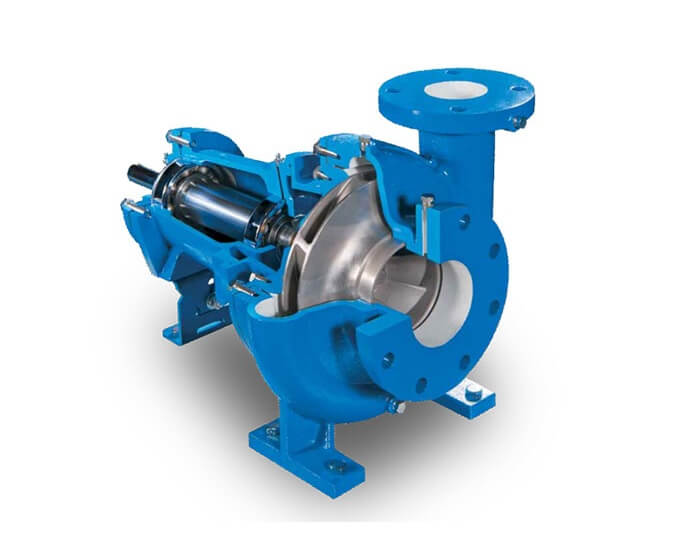
One of the most important components of dynamic pumps is the impeller. The impeller is responsible for transferring energy to the fluid.
Impellers are divided into two groups, vanes and jets, in terms of appearance. In vane impellers, the vanes are radially removed from the central axis of the impeller.
The next part that is present in most dynamic pumps is the pump housing. The chamber is responsible for directing the flow of fluid into and out of the pump.
The diffuser is another important component of dynamic pumps, which reduces the high speed of the fluid coming out of the impeller and converts it into pressure.
In addition, the pump shaft that connects the impeller to the motor, the shaft sealing system, the bearings that keep the shaft in place,
and the drive motor that is the source of mechanical energy for the pump, are other main components of dynamic pumps.
In some types of pumps, the valve is also used in order to reduce the noise caused by the movement of the fluid and to help convert the speed into pressure.
In general, we can say that the structure and composition of dynamic pump components have differences depending on their type and application,
but most of them have common features and components that make the process of converting kinetic energy into potential energy possible.
Advantages and disadvantages of dynamic pumps
In this section, we are going to examine the advantages and disadvantages of dynamic pumps separately.
Dynamic pumps, like any other technology, have strengths and weaknesses, knowing them can help us choose the best type of pump for different applications.
In the following, we will first mention some of the advantages of dynamic pumps and then examine the possible disadvantages of these types of pumps in order to have a clearer view of their positive and negative aspects.
Advantages of dynamic pump
Dynamic pumps have unique advantages and features that have made their use in various industries a growing trend.
First of all, dynamic pumps usually have small and compact sizes and require little space for installation. Also, the cost of construction and maintenance of these pumps is lower than other types.
Another advantage of the dynamic pump is its ease of installation, commissioning and maintenance.
These pumps have fewer rotating components and are easier to replace and service than other types of pumps.
In addition to the above, dynamic pumps can be suitable for pumping fluids with low to medium viscosity. Also, these pumps are a suitable option for applications that require low to medium flow rates.
Disadvantages of dynamic pump
Despite the many advantages of dynamic pumps, these types of pumps have some disadvantages and limitations that should be considered when choosing them.
One of the common problems in dynamic pumps is misalignment and vibration in the pump axis, which can reduce their useful life.
Also, due to the rotating components, these pumps are subject to damage to the impeller and wiring.
Impeller damage can lead to loss of pump efficiency in a short period of time. Also, damage to the sealing wire causes leakage and reduced efficiency.
In addition, the pump bearings have more wear due to the high speed of rotation.
Therefore, special attention should be paid to these items in the design and maintenance of dynamic pumps.
Choosing the right pump based on the working conditions and following the maintenance instructions can prevent these problems.